Advancing Municipal Engineering Excellence
South Africa’s premier gathering for municipal and civil engineering professionals, bringing together expertise, innovation and informed dialogue to shape the future of infrastructure.
Countdown is finished!
Conference in progress
CAPACITY REACHED
www.imesa.org.za
info@imesa.org.za
031 266 3263
Since 1961, the Institute of Municipal Engineering of Southern Africa (IMESA) has been committed to the pursuit of excellence in all facets of infrastructure, pushing boundaries and driving innovation. Our unwavering dedication extends to the professionals who form the backbone of this industry.
IMESA creates a platform for the exchange of ideas and viewpoints on all aspects of municipal engineering with the aim of expanding the knowledge and best practices in all local government municipalities. This is made up of a community of pioneers, professionals and enthusiasts united by a singular purpose: to reshape the landscape of infrastructure engineering.
IMESA is proud to host it’s 89th Conference & Exhibition and growing its footprint within the industry.
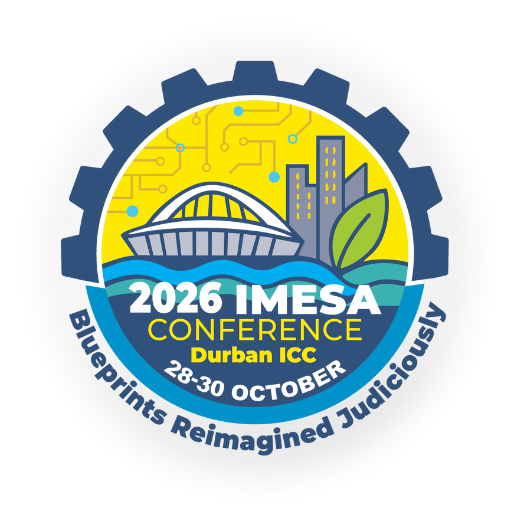
89th IMESA Conference & Exhibition / Durban ICC / 28-30 October 2026
ABOUT THE CONFERENCE
The IMESA Conference & Exhibition is South Africa’s leading platform for municipal and civil engineering professionals engaged in infrastructure planning, management and service delivery. It convenes engineers, municipal decision-makers, academics and industry partners to engage with current challenges, emerging innovations and practical solutions shaping the future of infrastructure.
With a legacy spanning over 88 years, the IMESA Conference & Exhibition has evolved into a cornerstone event on the professional engineer’s calendar, recognised for its technical depth, credible discourse and meaningful industry exchange at both national and international level.
CONFERENCE THEME: Blueprints Reimagined Judiciously
This year’s theme reflects a deliberate and informed rethinking of infrastructure development, balancing innovation with responsibility and progress with sound engineering judgement.
For decades, the IMESA Conference has remained the definitive meeting point for municipal and civil engineering professionals in South Africa, setting the standard for technical excellence, professional development and industry collaboration.
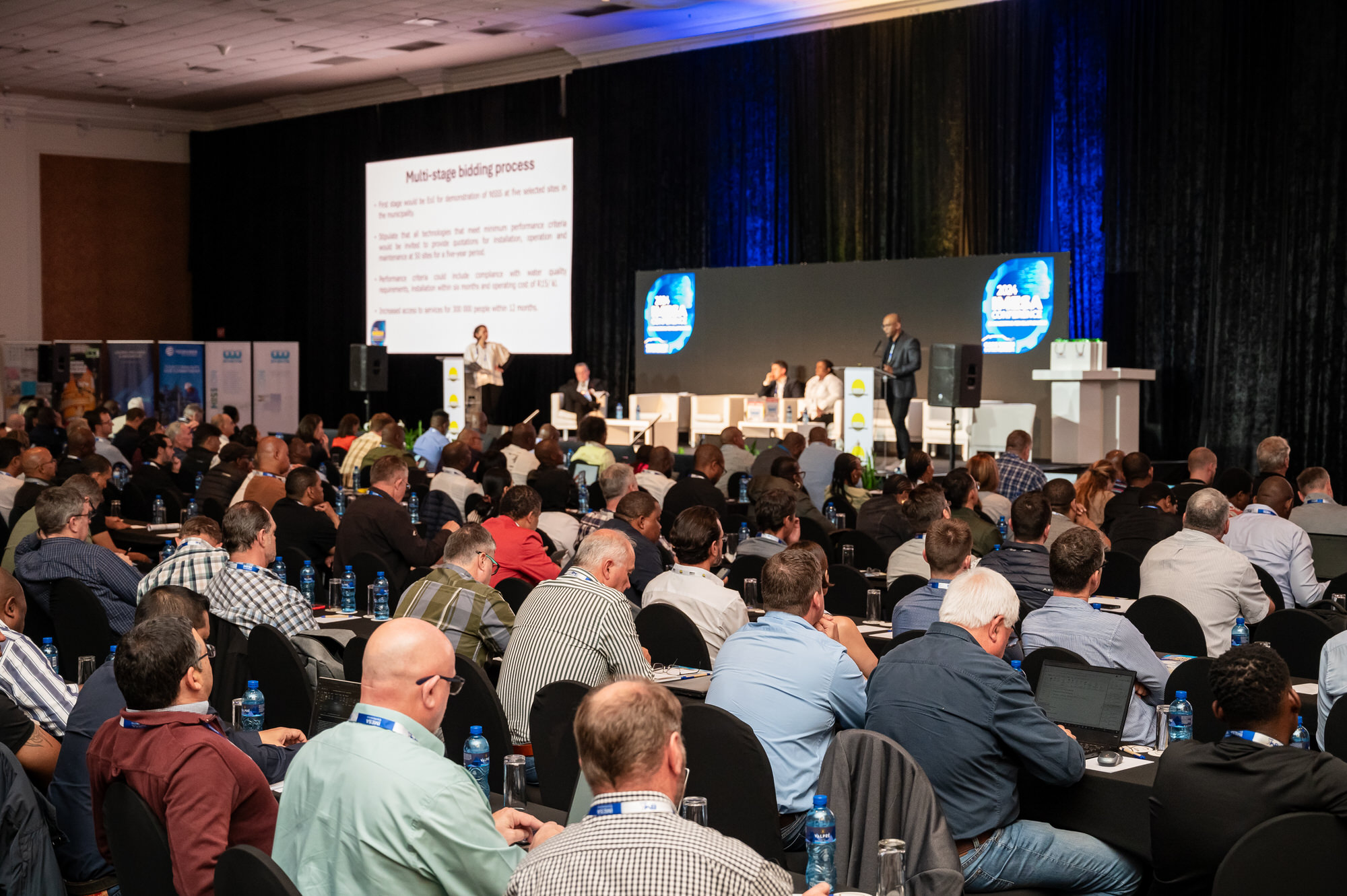
Why attend IMESA Conference?
CPD Accredited
Earn up to 2.5 CPD points through a professionally accredited programme aligned with industry standards and continuous professional development requirements.
Knowledge Sharing
Engage with leading engineers, researchers and practitioners through technical papers, keynote addresses and panel discussions focused on real-world infrastructure challenges.
Flexible Programme
Experience more than just a conference, from the exhibition floor and technical site visits to curated networking sessions and social engagements, designed to maximise value and connection.
Global Participation
IMESA attracts exhibitors, speakers and delegates from across the world, bringing international insight and shared learning while remaining firmly grounded in South Africa’s infrastructure context.
Benefits of Sponsoring & Exhibiting at IMESA
TARGETED AUDIENCE
Conference attracts professionals including decision-makers in municipal engineering and related fields. Sponsoring allows your company to directly engage with this niche audience.
RELATIONSHIP BUILDING
Strengthen existing relationships and forge new partnerships. Engage with delegates during sessions and social events.
NETWORKING OPPORTUNITIES
Exclusive networking opportunities to connect with key decision-makers, potential clients, and collaborators.
BRAND AWARENESS
Provides an opportunity for prominent brand exposure, gaining visibility among a targeted audience of professionals in the municipal engineering and infrastructure management field.
CONTACT US :
Debbie Anderson
083 326 3050 / conference@imesa.org.za
Interested in becoming a Sponsor?
Thinking about Exhibiting at the Conference?
Would you like to know more about Sponsorships or Exhibiting?
CONFERENCE SPONSORS